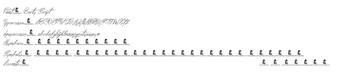
Decorative script font available as OpenType and TrueType files
Berty Script combines flowing cursive letterforms with roughly 200 glyphs and ships as both OpenType (OTF) and TrueType (TTF) files for desktop use. Designed by Jonathan S. Harris, the font installs like any system face and works inside common design and crafting applications. Its key traits include swirly, loopy strokes, multilingual support for languages such as German and Portuguese, and legibility tuned for invitations, social graphics, and branded print items, aimed at designers and hobby crafters seeking a handwritten look.
What part of the desktop workflow does this font change?
Berty replaces neutral sans or serif headings with a handwriting-style display face, intended for decorative typography rather than body text. The font installs as an OTF/TTF file and becomes available across desktop applications that accept system fonts, which means you can apply it in page layouts, image editors, and crafting software after the standard right-click install step on Windows.
How much control does the font give designers over style and character use?
The font supplies about 194–200 characters and a detailed character map, so you can access alternate glyphs and swashes when the host application supports OpenType features. Because it ships in OpenType format, designers can enable stylistic sets or discretionary ligatures to select loopy or restrained letterforms, giving precise control over the decorative look at the glyph level.
Does using the font affect output across print and digital media?
Files are provided in both OTF and TTF, which makes the font compatible with screen rendering and physical printing workflows. The designer states the face is optimized for legibility while remaining decorative, so it can render cleanly on posters and t-shirts as well as in exported social graphics, provided you use display-size settings rather than body-text sizes.
Who is this font suited to and what production constraints should users note?
The font targets graphic designers, crafters, social media managers, and individuals creating wedding stationery or brand accents. Its multilingual coverage includes English, French, German, and Portuguese, but commercial use requires a license from the designer’s site; the commonly distributed copies on free repositories are marked for personal use only.
Clear choice for decorative, display-focused projects with a licensing caveat
Berty fits projects that need a handwritten, swirly heading or logo treatment and designers who can work with OpenType features to swap glyphs. Its character set and dual-format delivery make integration into desktop workflows straightforward. One practical tip: enable stylistic alternates in your design app to access the loops and swashes. The font suits anyone seeking a decorative script for display use, provided they obtain the proper commercial license when applicable.